Jobgether for Remote Jobs: How It Works, Features, Benefits, and Tips
Introduction
Finding a remote job can be difficult when hundreds or even thousands of positions appear in search results. Many job seekers spend hours reading job descriptions, checking requirements, and applying to roles that may not be a strong match for their experience.
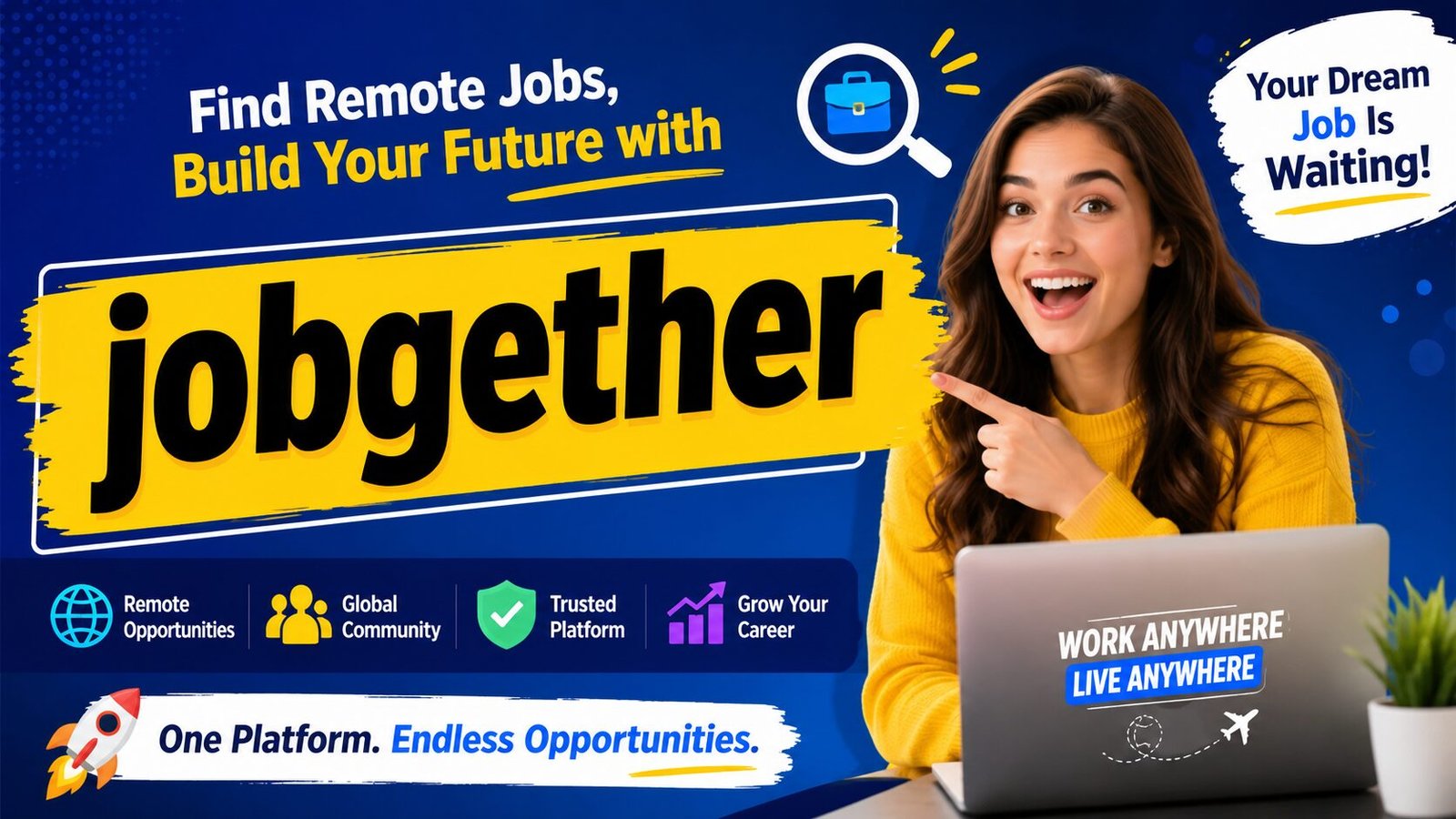
Jobgether takes a different approach. It is a remote and hybrid job platform that uses technology to help people discover employment opportunities based on their professional background, skills, preferences, and career goals.
Instead of focusing only on traditional keyword searches, Jobgether aims to make the job search more personalized. Its platform includes job matching, career guidance, profile improvement tools, and information designed to help candidates make more informed applications.
This guide explains how Jobgether works, what features it offers, who can use it, and how job seekers can get better results from the platform.
What Is Jobgether?
Jobgether is a platform focused on remote and flexible employment opportunities. It helps job seekers discover positions that may fit their professional experience and preferred working conditions.
The platform is particularly useful for people interested in:
- Fully remote jobs
- Hybrid positions
- International employment opportunities
- Flexible working arrangements
- Technology careers
- Marketing jobs
- Design positions
- Customer support roles
- Project management careers
- Other professional remote roles
The main idea is simple: instead of applying randomly to a large number of jobs, candidates can use information about their skills and career preferences to identify more relevant opportunities.
Why Remote Job Searching Can Be Difficult
Remote employment has become attractive to professionals because it can provide greater flexibility and access to companies outside a person’s local area.
However, remote job searching also creates several challenges.
Too Many Job Listings
Popular job websites can contain thousands of vacancies. Finding the right positions can therefore take considerable time.
Different Employer Requirements
One remote position may require candidates to live in a specific country, while another may accept applicants from several regions.
Competition
Remote positions can attract applicants from different locations, increasing competition for some roles.
Application Fatigue
Applying repeatedly without receiving useful feedback can become frustrating.
Jobgether attempts to address some of these problems by organizing opportunities around candidate profiles and compatibility.
How Jobgether Matches Candidates With Jobs
One of the central ideas behind Jobgether is job matching.
A candidate creates a professional profile containing information such as:
- Skills
- Work experience
- Career interests
- Preferred locations
- Work preferences
- Professional background
The platform can then compare this information with job requirements.
The purpose is to help users identify positions that appear more relevant to their profiles.
This approach can be useful because a job title alone does not always explain whether a position is suitable. Two jobs with similar titles may have very different requirements.
Understanding the Job Match Score
A key feature associated with Jobgether is its Match Score.
The score is intended to give candidates an indication of how closely their profile matches a particular job.
For example, a candidate may have strong experience in a specific programming language but lack another skill mentioned in the job description. Looking at the match information can help the candidate understand where their profile is strong and where it may need improvement.
A Match Score should not be treated as a guarantee of getting an interview or job offer.
Hiring decisions are made by employers and can depend on many factors beyond a platform’s matching system.
What Information Can Improve Your Matches?
The quality of your profile can affect the usefulness of job recommendations.
For better results, make sure your profile clearly explains:
Professional Experience
Include your previous roles and describe your responsibilities clearly.
Skills
List relevant technical and professional skills rather than adding unrelated abilities.
Career Interests
Mention the types of roles and industries you want to explore.
Work Preferences
Clearly indicate whether you are looking for remote, hybrid, or other flexible arrangements.
Location
Some remote jobs still have geographical restrictions. Keeping your location preferences accurate can make job recommendations more relevant.
Jobgether Career Coach
Another important part of the platform is career guidance.https://jobgether.com/career-coach
Jobgether provides tools intended to help candidates improve different parts of their job-search strategy.
These may include guidance related to:
- Resume improvement
- LinkedIn profile optimization
- Interview preparation
- Career planning
- Networking
- Job applications
This can be especially helpful for people who know their professional field but are unsure how to present their experience effectively.
Resume Optimization
Your resume is one of the most important parts of a job application.
A strong resume should make it easy for employers to understand:
- What you have done
- What skills you have
- What results you achieved
- What type of position you are seeking
Instead of simply listing responsibilities, try to describe meaningful achievements.
For example, instead of writing:
Responsible for managing social media accounts.
A stronger version could explain the actual work performed and measurable results where available.
This makes your experience easier for both recruiters and automated systems to understand.
LinkedIn Profile Improvement
A professional LinkedIn profile can support a remote job search.
Jobgether’s career tools can help candidates think about areas such as:
- Profile headline
- About section
- Skills
- Work history
- Professional achievements
Your LinkedIn profile should be consistent with your resume. Different job titles, dates, or skills across the two profiles can create confusion.
Finding Remote Jobs More Efficiently
One of the biggest advantages of using a specialized remote job platform is reducing unnecessary searching.
Instead of opening every listing, candidates can first consider whether a position meets their basic requirements.
Important factors include:
- Job type
- Location eligibility
- Required experience
- Salary information
- Working hours
- Required skills
- Company expectations
This approach can make the job-search process more organized.
Who Can Use Jobgether?
Jobgether can be useful for professionals across several industries.
Software Developers
Developers can search for remote positions involving programming, software engineering, web development, data, and related technical fields.
Marketing Professionals
Digital marketers, SEO specialists, content marketers, and social media professionals may find flexible marketing positions.
Designers
UX designers, UI designers, graphic designers, and other creative professionals can explore remote opportunities.
Customer Support Workers
Remote customer service and support roles are available across many industries.
Project Managers
Professionals with experience managing projects, teams, and workflows can search for remote project management positions.
Other Professionals
Remote employment is not limited to technology. Depending on employer demand, opportunities can exist in areas such as sales, operations, finance, recruitment, education, and administration.
Jobgether for Beginners
People who are new to remote work may find the process confusing.
A simple approach is to start with a complete profile.
First, identify the type of work you want.
Next, list your strongest skills and previous experience.
Then, create or update your resume.
After that, review job recommendations and compare them with your career goals.
Do not apply to every position simply because it is remote. Read the requirements carefully before submitting an application.
How to Improve Your Remote Job Search
Using a platform effectively is only one part of finding employment.
The following practices can also help.
Keep Your Resume Updated
Add recent projects, responsibilities, certifications, and achievements.
Use Relevant Keywords
Read job descriptions carefully and use accurate terminology that reflects your real skills and experience.
Build a Professional Profile
A complete online professional profile can make it easier for recruiters to understand your background.
Research Employers
Before applying, learn about the company, position, responsibilities, and employment conditions.
Customize Applications
A general resume may not communicate your suitability as clearly as a version adjusted to the specific position.
Track Your Applications
Keep a simple record of:
- Company name
- Job title
- Application date
- Application status
- Interview date
- Follow-up date
This prevents you from losing track of opportunities.
Remote Jobs and Location Restrictions
One common misunderstanding about remote work is that every remote job can be performed from anywhere.
That is not always the case.
A company may advertise a position as remote but restrict applicants to:
- A particular country
- A specific region
- Certain time zones
- Locations where the company can legally employ workers
Therefore, always read the location requirements before applying.
A strong Match Score does not necessarily remove an employer’s location restrictions.
Is Jobgether Suitable for International Job Seekers?
Jobgether is designed around remote and flexible employment opportunities, making it relevant to people searching beyond their local job market.
However, international candidates should carefully check each vacancy.
Important questions include:
- Can applicants from my country apply?
- Is the position employee-based or contract-based?
- What time zone is required?
- Does the company support international hiring?
- Are there legal or tax restrictions?
These details can vary from one employer to another.
Jobgether vs Traditional Job Searching
Traditional job searching often begins with a keyword.
For example, someone might search for:
Remote Content Writer
They then review a long list of vacancies.
A personalized matching approach can add another layer by considering the candidate’s profile and preferences.
The difference can be summarized like this:
| Traditional Job Search | Personalized Job Matching |
|---|---|
| Often starts with keywords | Starts with candidate information |
| Large number of listings | Focus on relevant opportunities |
| Candidate checks requirements manually | Matching tools help identify compatibility |
| Can require significant browsing | Designed to reduce unnecessary searching |
| Limited feedback in some cases | May provide profile-related guidance |
Neither approach guarantees employment. The usefulness depends on the quality of the candidate’s profile, available jobs, employer requirements, and other factors.
Common Mistakes to Avoid
Remote job seekers can make several mistakes when using online platforms.
Applying Without Reading Requirements
A job may look attractive but have requirements you cannot meet.
Using an Old Resume
An outdated resume may not accurately represent your current skills.
Ignoring Location Rules
Remote does not automatically mean worldwide.
Creating an Incomplete Profile
Missing information can make it harder for matching tools to understand your background.
Applying Without Research
Always investigate the employer and job details before sharing personal information or completing an application.
Safety Tips for Remote Job Seekers
Job seekers should remain careful when applying online.
Be cautious if a recruiter or employer:
- Requests money to process an application
- Promises guaranteed employment
- Requests sensitive financial information too early
- Uses suspicious email addresses
- Provides unclear job responsibilities
- Pressures you to make an immediate payment
Legitimate employers generally provide clear information about the position and hiring process.
When possible, verify important details through the employer’s official website.
Advantages of Using Jobgether
Jobgether can provide several useful features for people searching for flexible work.
These include:
- Remote-focused job opportunities
- Personalized job recommendations
- Match information
- Career guidance
- Resume improvement support
- LinkedIn optimization guidance
- Job-search organization
- Opportunities across different professional fields
The usefulness of these features will depend on the individual’s career goals and the jobs available at the time of searching.
Possible Limitations
No job platform can provide every opportunity.
Some potential limitations include:
- Certain positions may have geographic restrictions.
- Job availability changes frequently.
- Some features may depend on the user’s plan.
- A match score does not guarantee an interview.
- Employers make the final hiring decisions.
- Some candidates may prefer applying directly through company websites.
For this reason, Jobgether can be used as one part of a wider job-search strategy.
A Simple Strategy for Using Jobgether
If you are starting your remote job search, follow this simple process.
First: Create and complete your professional profile.
Second: Upload an updated resume.
Third: Add your real skills and work experience.
Fourth: Set your preferred work and location options.
Fifth: Review recommended positions.
Sixth: Compare job requirements with your actual experience.
Seventh: Prioritize relevant opportunities rather than applying randomly.
Eighth: Use career guidance to improve your resume and professional profiles.
Ninth: Track applications and follow up when appropriate.
Frequently Asked Questions
What is Jobgether used for?
Jobgether is used to help professionals discover remote and flexible employment opportunities and receive career-related guidance.
Does Jobgether guarantee a job?
No. Jobgether can help with job discovery and matching, but employment decisions are made by employers.
Is a high Match Score a guarantee of an interview?
No. A Match Score indicates compatibility with a job according to the platform’s matching system. Employers may consider many additional factors.
Can beginners use Jobgether?
Yes. Beginners can create a professional profile and use available job-search and career guidance tools.
Can I find international remote jobs?
Some opportunities may be available internationally, but each job can have its own location and employment restrictions.
Should I apply to every job with a good Match Score?
Not necessarily. You should still read the complete job description, confirm the location requirements, and make sure the role fits your career goals.
Is Jobgether only for technology jobs?
No. Remote opportunities can exist across many professional fields, including marketing, design, customer support, sales, operations, and project management.
Final Thoughts
Jobgether provides a more personalized approach to remote job searching by combining job discovery with matching and career-focused tools. Its approach can help candidates spend more time reviewing relevant opportunities instead of manually searching through large numbers of unrelated listings.
For the best results, keep your professional profile accurate, maintain an updated resume, review job requirements carefully, and treat Match Scores as guidance rather than a promise of employment.
Remote job searching still requires patience and active participation. However, using organized tools such as Jobgether can make the process easier to manage and help candidates approach their search in a more targeted way.