Fun Interview Questions: 100+ Creative Questions to Break the Ice and Find Great Talent
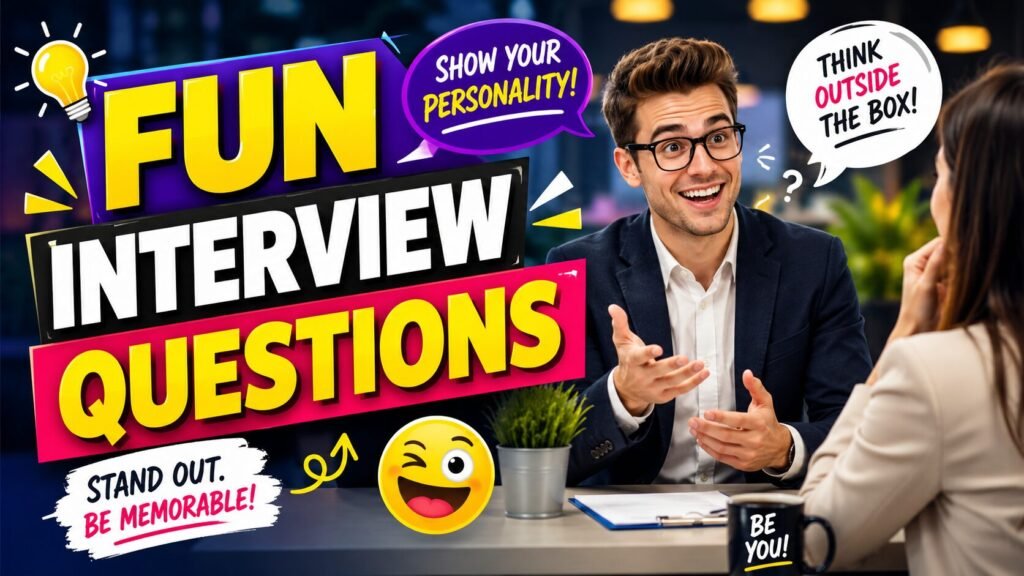
Table of Contents
Fun Interview Questions
Hiring doesn’t have to be a rigid question-and-answer session. Many companies now use fun interview questions to create a relaxed atmosphere, encourage authentic conversations, and learn more about a candidate’s personality beyond their resume. These questions can reveal creativity, communication skills, problem-solving ability, and cultural fit in ways traditional interview questions often cannot.
Whether you’re a hiring manager, recruiter, business owner, or job seeker preparing for an interview, understanding fun interview questions can help make the process more enjoyable and productive.
In this comprehensive guide, we’ll explain what fun interview questions are, how they work, their benefits, examples, best practices, common challenges, and future trends.
What Are Fun Interview Questions?
Fun interview questions are creative, unexpected, or lighthearted questions that employers ask during interviews to understand a candidate’s personality, thinking process, creativity, and communication style.
Unlike standard questions such as “Tell me about yourself,” fun questions encourage candidates to think differently and respond naturally.
Definition and Background
Traditional interviews have focused mainly on qualifications, experience, and technical knowledge. However, modern organizations increasingly value soft skills like adaptability, collaboration, emotional intelligence, and creativity.
To evaluate these qualities, many recruiters include fun interview questions that:
- Reduce interview stress
- Encourage authentic conversations
- Reveal personality
- Test creative thinking
- Make interviews memorable
Today, these questions are common in technology companies, startups, marketing agencies, creative industries, customer service roles, and leadership interviews.
Purpose and Relevance in Today’s Hiring Community
Although some online discussions compare interview strategies with gaming mods guide, mod configuration, or productivity fun interview questions tools, the primary purpose of fun interview questions is improving hiring—not software modification.
Their relevance includes:
- Improving candidate engagement
- Reducing interview anxiety
- Encouraging creative thinking
- Identifying communication skills
- Assessing cultural fit
- Making hiring more human
Modern employers understand that personality often matters just as much as technical expertise.
Key Features of Fun Interview Questions
1. Encourage Creativity
Candidates must think beyond memorized answers.
Example:
If you could invent a holiday, what would people celebrate?
2. Reveal Personality
These questions provide insight into values, interests, and communication style.
Example:
Which fictional character would make the best manager?
3. Improve Candidate Comfort
Fun conversations help candidates relax and perform more naturally.
4. Test Problem-Solving
Creative scenarios demonstrate logical thinking.
Example:
How would you explain the internet to someone living 500 years ago?
5. Make Interviews Memorable
Candidates remember companies that create enjoyable interview experiences.
Main Functionalities of Fun Interview Questions
Fun interview questions serve several practical purposes.
Personality Assessment
Recruiters evaluate:
- Confidence
- Curiosity
- Humor
- Emotional intelligence
Communication Skills
Candidates demonstrate how they organize ideas and explain concepts.
Creativity Testing
Unexpected questions reveal innovative thinking.
Cultural Fit
Organizations determine whether applicants align with company values.
Stress Handling
Candidates show how they react under unexpected situations.
Unique Aspects That Differentiate Them
Unlike traditional interview questions, fun interview questions:
- Have no single correct answer
- Focus on thinking rather than memorization
- Encourage storytelling
- Build rapport
- Create positive interview experiences
This makes them valuable additions rather than replacements for standard interview questions.
How Fun Interview Questions Work
Step 1: Recruiter Selects Questions
Interviewers choose questions based on:
- Job role
- Company culture
- Experience level
- Interview stage
Step 2: Candidate Thinks
The candidate reflects briefly before answering.
Recruiters observe:
- Thought process
- Creativity
- Confidence
Step 3: Candidate Responds
There are usually multiple acceptable answers.
Interviewers focus on reasoning rather than perfection.
Step 4: Follow-Up Discussion
Interesting answers often lead to meaningful conversations.
Technical Overview (Simple Language)
There is no software behind fun interview questions. Instead, interviewers use structured question lists or digital fun interview questions tools available through HR platforms.
These questions can be delivered through:
- In-person interviews
- Video interviews
- Phone interviews
- Group interviews
- Online assessments
Many companies maintain internal question banks for consistency.
Benefits of Using Fun Interview Questions
Better Candidate Experience
Relaxed interviews reduce anxiety.
More Authentic Answers
Candidates respond naturally instead of reciting prepared scripts.
Improved Hiring Decisions
Recruiters gain deeper insights into personality.
Stronger Employer Brand
Creative interviews leave lasting positive impressions.
Higher Engagement
Candidates enjoy interactive conversations.
Practical Use Cases
Fun interview questions work well in many situations.
Software Development
Ask:
If debugging were a superhero, what powers would it have?
Customer Service
Ask:
What’s the funniest misunderstanding you’ve ever solved?
Marketing
Ask:
If your favorite brand were a person, how would you describe them?
Leadership
Ask:
If you could invite three historical figures to dinner, who would they be?
Graduate Recruitment
Ask:
If your life had a soundtrack, what would be the opening song?
Popular Fun Interview Questions
Here are examples that many employers enjoy using.
Icebreaker Questions
- What’s your favorite weekend activity?
- Tea or coffee?
- What’s your dream vacation?
- Which movie can you watch repeatedly?
- What’s your hidden talent?
Creative Questions
- If animals could talk, which would be funniest?
- If you invented a new color, what would you call it?
- What superpower would improve your work life?
- Which fictional universe would you work in?
Problem-Solving Questions
- How would you sell ice to a penguin?
- Explain Wi-Fi to a five-year-old.
- Design a new traffic rule.
- How would you improve Mondays?
Teamwork Questions
- What role do you naturally take in group projects?
- Describe your ideal teammate.
- How would coworkers describe you in three words?
Fun Interview Questions Tools
Several HR platforms help recruiters organize interview question libraries.
Examples include:
- Interview scorecards
- ATS platforms
- HR management software
- AI interview assistants
- Candidate evaluation systems
These fun interview questions tools help standardize interviews while keeping them engaging.
How to Get Started
Step 1
Identify the role you’re hiring for.
Step 2
Choose 5–10 fun interview questions.
Step 3
Mix them with traditional interview questions.
Step 4
Evaluate reasoning rather than “correct” answers.
Step 5
Use consistent scoring criteria.
Tips for Beginners
- Keep questions professional.
- Avoid controversial topics.
- Let candidates think before answering.
- Encourage storytelling.
- Ask follow-up questions.
- Stay friendly.
- Respect different personalities.
Remember that introverted candidates may need slightly more thinking time.
Pros and Cons
Pros
- Makes interviews enjoyable
- Reduces stress
- Encourages creativity
- Reveals communication skills
- Improves employer branding
- Builds rapport quickly
Cons
- Some candidates may feel surprised
- Answers can be subjective
- Poorly chosen questions may seem irrelevant
- Not suitable as the only interview method
Common Issues and Troubleshooting
Candidate Doesn’t Know How to Answer
Solution:
Give them time to think.
Interview Goes Off Topic
Solution:
Bring the discussion back to job-related competencies.
Answers Become Too Casual
Solution:
Balance fun questions with professional discussion.
Bias During Evaluation
Solution:
Use structured scoring instead of personal preferences.
Best Practices
Use Relevant Questions
Questions should connect indirectly to workplace skills.
Encourage Conversation
The goal is discussion—not tricking candidates.
Mix Different Types
Include:
- Icebreakers
- Creativity
- Teamwork
- Leadership
- Problem-solving
Stay Inclusive
Avoid questions requiring specific cultural knowledge.
Future of Fun Interview Questions
Hiring continues evolving alongside AI and remote work.
Emerging trends include:
- AI-assisted interview preparation
- Personalized interview experiences
- Virtual interview games
- Interactive assessments
- Behavioral analytics
- Remote-first hiring practices
- Smart interview platforms
Organizations increasingly recognize that hiring should assess both technical ability and human qualities.
Frequently Asked Questions
Are fun interview questions professional?
Yes. When used appropriately, they help evaluate communication, creativity, and personality.
Do companies actually use them?
Absolutely. Many startups, technology firms, marketing agencies, and global organizations include creative interview questions.
Should candidates prepare?
Yes. Practice thinking aloud, explaining your reasoning, and staying calm with unexpected questions.
Are there right or wrong answers?
Usually not. Interviewers are more interested in your thought process than a perfect answer.
Can fun interview questions replace traditional interviews?
No. They work best alongside technical and behavioral interview questions.
Conclusion
Fun interview questions have become an important part of modern hiring because they help employers discover qualities that resumes and standard interview questions often miss. By encouraging creativity, authentic conversations, and relaxed interactions, these questions create a better experience for both recruiters and candidates.
Whether you’re preparing for your next interview or designing a hiring process, using thoughtful fun interview questions can improve engagement, reveal valuable insights, and make interviews more memorable. Start exploring different question styles, practice answering creatively, and use them strategically to build stronger hiring decisions and more meaningful conversations.