
Jeff Dean AI Startup Discovery Loop: How a New AI Company Plans to Automate Scientific Discovery
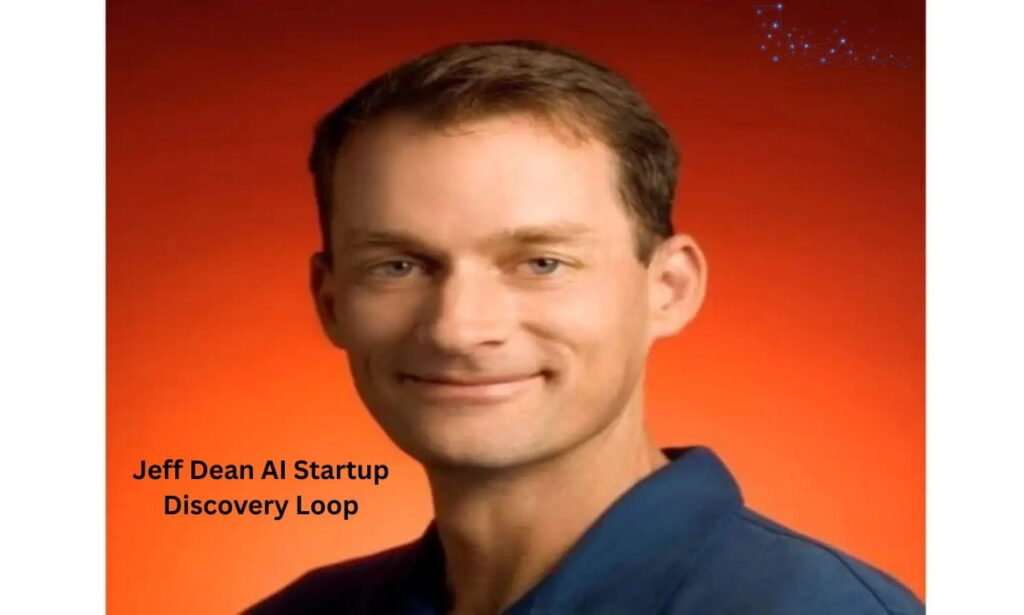
Table of Contents
Introduction
Artificial intelligence is moving into a new and exciting stage. For years, AI has helped people search for information, write software, create images, analyze data, and solve difficult problems. Now, a group of leading AI researchers wants to take the next step: using AI to automate parts of the scientific discovery process itself.
At the center of this effort is Jeff Dean AI startup Discovery Loop, a new public benefit company founded by Jeff Dean, Sanjay Ghemawat, Quoc Le, and Oriol Vinyals. The company was announced in August 2026 after the four founders left senior positions at Google and Google DeepMind. Their goal is ambitious: build AI systems that can propose experiments, run them, study the results, and use those results to decide what to try next.
This idea could change how research is done. Instead of scientists spending weeks or months testing ideas one after another, AI-powered systems could potentially run thousands of experiments in parallel. Discovery Loop says it will first focus on machine-learning research and engineering before expanding into wider areas of science and engineering.
What Is Discovery Loop?
Discovery Loop is an AI startup focused on automating scientific and engineering discovery. It has been established as a public benefit corporation, meaning its structure is designed to support a broader public mission rather than focusing only on traditional commercial goals.
The company’s stated mission is to automate machine learning, science, and engineering so that important discoveries can happen faster. Its founders believe that scientific progress is often slowed by a simple problem: experiments are usually performed one after another, with humans required to design, execute, study, and improve each step.
Discovery Loop wants to change that pattern.
Its basic idea can be summarized like this:
- Propose an idea or hypothesis.
- Design an experiment.
- Run the experiment.
- Measure the results.
- Learn from those results.
- Create a better experiment.
- Repeat the process.
The company calls this approach automating the experimental loop. According to Discovery Loop, powerful AI models combined with large-scale computing could allow many such loops to run at the same time.
That may sound like science fiction, but the concept builds on a very practical principle: computers are exceptionally good at repeating measurable tasks quickly.
Jeff Dean AI Startup Discovery Loop and the Man Behind It
Jeff Dean is one of the best-known engineers and AI researchers associated with Google. He joined Google in 1999 and spent about 27 years there before leaving to launch Discovery Loop. During that time, he became involved in some of the company’s most important computing and AI efforts.
Dean was a co-founder of Google Brain and later became a leading figure in Google Research and Google DeepMind. His work has touched large-scale computing, machine learning, AI infrastructure, and major Google technologies.
His long career gives Discovery Loop something many young startups don’t have: decades of experience building systems that operate at enormous scale.
The company says its four founders collectively have decades of close collaboration. Discovery Loop describes their background as spanning chips, hardware infrastructure, software infrastructure, machine-learning models, and products.
In other words, this isn’t simply a group of people with an interesting AI idea. The founding team has experience working on some of the largest and most complex computing systems in the world.
Who Founded Discovery Loop?
The founding team contains four major names from Google’s AI and engineering history.
| Founder | Background | Role at Discovery Loop |
|---|---|---|
| Jeff Dean | Distributed systems, Google Brain, AI and computing | Co-founder and CEO |
| Sanjay Ghemawat | Large-scale systems and distributed computing | Co-founder |
| Quoc Le | Deep learning and machine learning research | Co-founder |
| Oriol Vinyals | Google DeepMind and advanced AI research | Co-founder |
Radical Ventures identifies Jeff Dean as co-founder and CEO and lists Ghemawat, Le, and Vinyals as the other three co-founders.
The four researchers have worked together in different combinations for many years. Their previous work includes technologies and research associated with Google Search, Google File System, MapReduce, Bigtable, TensorFlow, TPUs, AlphaStar, AlphaCode, AlphaFold, Gemini, and other major AI and computing projects.
That’s quite a résumé.
Why Did Jeff Dean Leave Google?
Jeff Dean’s departure from Google was significant because he had been one of the company’s most influential technical leaders for decades.
According to reporting around his departure, Dean wanted to explore what could be achieved by a small, highly focused team using modern cloud computing and AI infrastructure. He has discussed the growing ability of smaller teams to access powerful computing resources without having to build everything themselves.
This is an important point.
In the early days of large-scale computing, building a powerful research system could require enormous amounts of hardware, money, and engineering staff. Today, cloud computing can give a small team access to computing resources that would have been difficult to obtain in the past.
For Dean and his co-founders, that creates an opportunity.
Instead of working inside one of the world’s biggest technology companies, they can focus a small team on one specific mission.
How the Discovery Loop Approach Works
The heart of Discovery Loop is the idea of a continuous experimental process.
Imagine a scientist wants to improve an AI model.
Traditionally, the researcher might:
- Think of an idea.
- Change the model.
- Run a test.
- Wait for the results.
- Study the data.
- Decide what to change.
- Run another test.
The process works, but it can be slow.
Discovery Loop wants AI systems to automate much of this cycle. The system could potentially generate multiple ideas, create experiments, execute them, analyze their results, and select promising directions for another round.
A simplified version looks like this:
Hypothesis → Experiment → Evaluation → Learning → New Hypothesis
The goal is to make this loop much faster and run many loops simultaneously.
Discovery Loop says its systems will use frontier AI models and large-scale computing infrastructure to rapidly propose, run, and learn from evaluations.
Why Running Thousands of Experiments Matters
The biggest advantage could be speed.
A human research team has limited time. Even an excellent scientist can only work on a certain number of experiments at once.
Computers don’t face the same limitation.
If an experiment can be represented as software and measured automatically, an AI system could potentially run many versions at the same time.
For example, suppose researchers want to test 10,000 possible machine-learning configurations.
A traditional team might have to prioritize a small number of promising options. An automated system could potentially test thousands in parallel, depending on available computing resources and the complexity of each experiment.
This doesn’t mean every experiment would be useful. Far from it. But the ability to explore a much larger search space could reveal ideas that humans might otherwise overlook.
That’s where the phrase continuous exploration becomes important. Discovery Loop’s website describes its vision as using automated experimental loops to increase the quantity and quality of scientific and engineering output.
Discovery Loop Will Start With Machine Learning
The company isn’t attempting to solve every scientific problem on day one.
Its initial focus is machine-learning research and engineering.
This is a sensible starting point because much of AI research can be performed through software. Researchers can change algorithms, model architectures, training methods, datasets, and other variables, then evaluate the results using computers.
Discovery Loop says it intends to become its own first customer. In simple terms, the company plans to use its automated research technology to improve its own AI systems and infrastructure.
This creates a useful feedback cycle:
Build → Test → Learn → Improve → Repeat
If the system works well in machine learning, the company can then consider applying the same approach to other scientific and engineering fields.
Potential Areas Beyond AI
Discovery Loop has a much larger vision than machine learning.
The company says its approach could eventually be applied to many problems in science and engineering. Its website points toward areas such as medicine, health informatics, clean water, solar energy, cybersecurity, and the broader engineering challenges identified by the National Academy of Engineering.
Potential areas include:
- Drug discovery
- Biology
- Materials science
- Chip design
- Clean energy
- Scientific computing
- Health-related research
- Machine-learning systems
- Engineering optimization
Radical Ventures also describes Discovery Loop as starting with machine-learning research and later aiming at challenges across engineering, medicine, materials science, and clean energy.
Of course, moving from software experiments to physical science is a much harder problem. Biology and chemistry, for example, involve laboratories, physical materials, safety rules, and complex variables.
So the road ahead won’t be a walk in the park.
The Connection Between AI and Scientific Discovery
AI has already changed scientific research in several ways.
Machine-learning systems can analyze enormous datasets, recognize patterns, predict outcomes, and assist researchers with difficult calculations. But Discovery Loop is targeting something broader.
Instead of using AI only as an assistant, the company wants AI to become part of the research process itself.
That distinction matters.
An AI assistant might help a scientist write code for an experiment.
A more advanced system could:
- Suggest what experiment should be performed.
- Write the required code.
- Run the experiment.
- Analyze the output.
- Compare it with previous results.
- Suggest another experiment.
- Continue the process automatically.
The human researcher could then focus on high-level questions, scientific judgment, safety, and important decisions.
This could make research more productive without necessarily removing humans from the process.
Why the Founding Team Is So Important
A startup’s idea matters, but execution matters even more.
Discovery Loop has brought together four people with unusually deep experience in AI and computing. Jeff Dean and Sanjay Ghemawat have long histories in large-scale distributed systems. Quoc Le has contributed to important deep-learning research, while Oriol Vinyals has worked extensively in advanced AI research at Google DeepMind.
The team also understands the full technology stack.
That means they can think about:
- Computer hardware
- Cloud infrastructure
- Distributed systems
- Machine-learning models
- AI research
- Software engineering
- Experimental systems
- Large-scale computing
This combination could be especially useful because automated scientific discovery requires more than a clever AI model. It requires infrastructure capable of running huge numbers of experiments reliably.
Who Is Funding Discovery Loop?
Discovery Loop has attracted several major technology investors.
Radical Ventures and Khosla Ventures are leading its initial funding round, with participation from Lightspeed, Kleiner Perkins, Doerr Capital, and Alphabet, Google’s parent company. Alphabet is also described as a founding investor and Google is expected to provide cloud support.
The company has therefore received support from investors with significant experience in artificial intelligence and technology.
However, the precise funding amount and valuation have not been publicly disclosed in the available reports.
| Area | Publicly reported information |
|---|---|
| Company | Discovery Loop |
| Structure | Public benefit corporation |
| Founders | Jeff Dean, Sanjay Ghemawat, Quoc Le, Oriol Vinyals |
| CEO | Jeff Dean |
| Initial focus | Machine-learning research and engineering |
| Major investors | Radical Ventures, Khosla Ventures, Lightspeed, Kleiner Perkins, Doerr Capital, Alphabet |
| Cloud support | |
| Broader goal | Automated scientific and engineering discovery |
Discovery Loop as a Public Benefit Corporation
The company’s public benefit structure is another interesting part of its identity.
A public benefit corporation is designed to allow a company to pursue a broader public mission alongside its business activities.
For Discovery Loop, that mission is connected to accelerating scientific and engineering progress.
The founders aren’t simply saying, “Let’s build another AI product.”
Their stated goal is much bigger: develop AI systems that can help solve important problems and increase the speed of scientific progress.
That optimistic mission is one reason the startup has attracted so much attention so quickly.
What Could Discovery Loop Mean for the Future?
If Discovery Loop succeeds, the impact could extend far beyond the AI industry.
Scientific progress is often limited by time, money, skilled researchers, laboratory capacity, and the difficulty of exploring huge numbers of possible ideas.
Automation could help reduce some of these limits.
For example, an AI research system might be able to explore thousands of machine-learning ideas while researchers focus on the most promising results.
In materials science, similar systems could potentially help search for materials with useful properties.
In drug discovery, AI could help researchers explore possible molecules and biological hypotheses, although physical testing would still be essential.
In engineering, automated systems could search for designs that meet complicated performance requirements.
The common theme is simple:
More experiments + faster learning = more opportunities for useful discoveries.
That doesn’t guarantee breakthroughs, but it could improve the odds.
The Challenges Discovery Loop Must Solve
The vision is exciting, but it would be a mistake to assume that the difficult parts have already been solved.
Discovery Loop is still a new company, and its central technology is under development.
Some major challenges include:
Reliable Experiment Design
AI systems need to design experiments that actually answer useful questions.
Running thousands of bad experiments quickly isn’t valuable.
Accurate Evaluation
The system must correctly understand experimental results. Poor evaluation could cause an AI system to follow the wrong path.
Computing Costs
Large-scale experimentation can require enormous computing power. More experiments mean more infrastructure and potentially higher costs.
Human Oversight
Some scientific work cannot safely operate without people. Medical, biological, chemical, and physical experiments can involve serious risks.
Avoiding False Discoveries
An AI system may find patterns that look promising but don’t hold up under further testing. Scientific validation will remain essential.
Moving Into Physical Science
Software-based machine-learning experiments are easier to automate than laboratory experiments. Moving into biology, chemistry, medicine, or materials science will introduce many additional challenges.
These issues don’t make the idea impossible. They simply show why strong engineering, careful testing, and scientific discipline will be necessary.
Is Discovery Loop Trying to Replace Scientists?
Not necessarily.
The company’s stated mission is to automate experimental loops, not simply eliminate researchers.
A better way to understand the idea is to think of AI as a research engine.
Scientists could set goals, define constraints, interpret important findings, check safety, and make strategic decisions. AI could handle large amounts of repetitive experimentation.
This could allow small teams to accomplish more.
Imagine a research group of ten people being able to explore thousands of computational experiments that previously required months of manual work. That could be a major productivity gain.
The relationship could become less like human versus machine and more like human plus machine.
Jeff Dean AI Startup Discovery Loop and the Bigger AI Race
The launch of Discovery Loop also shows how the AI industry is changing.
Large technology companies have traditionally been the place where researchers had access to huge computing resources, massive datasets, and large engineering teams.
But the cloud has changed the equation.
A small startup can now rent powerful computing infrastructure instead of owning every machine it needs. At the same time, open research, increasingly capable AI models, and specialized hardware have lowered some barriers to experimentation.
Jeff Dean’s move demonstrates how experienced researchers can take this new environment and build highly focused companies.
It also highlights a broader trend: AI talent is increasingly interested in applying artificial intelligence to science, medicine, engineering, and other fields rather than building only consumer chatbots.
What Makes Discovery Loop Different?
There are many AI startups in the world, so an obvious question is: what makes Discovery Loop special?
Its answer appears to be automation of the complete research cycle.
| Traditional research | Discovery Loop’s proposed approach |
|---|---|
| Human proposes experiments | AI helps propose experiments |
| Experiments often run sequentially | Many experiments can potentially run in parallel |
| Humans analyze results | AI can automatically analyze evaluations |
| Researchers decide the next step | AI can generate the next experimental cycle |
| Limited by human research time | Designed to scale with computing resources |
The key word is “proposed.”
Discovery Loop has described a vision and an approach, but the company is still building the systems needed to prove that this approach can work reliably at large scale.
That distinction is important for readers who want accurate information rather than hype.
The Road Ahead for Discovery Loop
Discovery Loop is beginning with a focused goal: automate machine-learning research and engineering.
Its founders then hope to expand the approach to broader scientific and engineering challenges.
The company’s website describes a future in which a small number of people could conduct research and engineering tasks far more rapidly than large teams can today.
Whether that vision becomes reality will depend on several factors:
- How capable its AI systems become.
- How efficiently they use computing resources.
- How accurately they evaluate experiments.
- How well humans can supervise automated research.
- Whether the technology produces meaningful discoveries.
- Whether the approach can move beyond software into physical science.
There are plenty of hurdles ahead, but there is also plenty of room for optimism.
Final Thoughts on Jeff Dean AI Startup Discovery Loop
Jeff Dean AI startup Discovery Loop represents one of the most ambitious new directions in artificial intelligence: using AI not merely to answer questions, but to help conduct the process of discovery itself.
Founded by Jeff Dean, Sanjay Ghemawat, Quoc Le, and Oriol Vinyals, the company wants to automate experimental loops so that AI systems can propose ideas, run tests, analyze results, and improve through repeated cycles. Its first focus is machine-learning research, with ambitions to eventually tackle wider scientific and engineering problems.
The idea is still young, and the company has much to prove. There are technical, scientific, financial, and safety challenges that can’t be brushed under the rug. Yet its founding team, infrastructure ambitions, and public-benefit mission make Discovery Loop an important company to watch.
If the founders can turn their vision into dependable technology, the result could be more than another successful AI startup. It could help create a new model for scientific research—one where humans define important goals while intelligent machines continuously explore, test, learn, and improve.
For now, the story of Jeff Dean AI startup Discovery Loop is only beginning. But if its vision of continuous, automated exploration works as planned, the next chapter of AI may be written not just in chat windows and software applications, but inside the very process through which humanity discovers what is possible.