
Megumi Fushiguro: Every Detail You Actually Need to Know
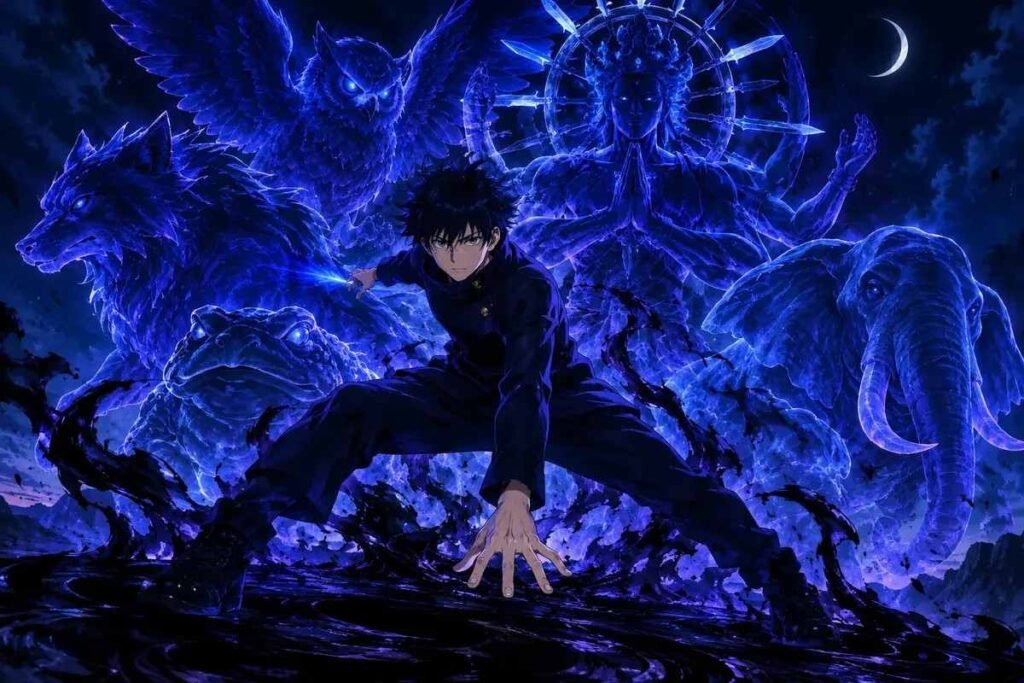
Searching for a single page that covers this quiet sorcerer without leaving gaps? Most guides skip the family drama, gloss over his cursed technique mechanics, and ignore why Sukuna wants his body so badly. That stops here. Below you get the full picture — powers, bloodline, personality, and the exact moments that reshaped his fate across every major arc.
The Boy Who Walked Into Chapter One Already Carrying Weight
Gege Akutami placed Megumi Fushiguro on page one of the manga for a reason. While Itadori stumbled into the jujutsu world by accident, Megumi arrived as a trained Grade 2 operative who already understood the cost of fighting curses. He attends Tokyo Jujutsu High as a first-year student, but his combat instincts outclass most upperclassmen.
His calm exterior hides a mind that processes battle scenarios faster than nearly anyone his age. He does not scream attack names for dramatic effect. He calculates, adapts, and strikes when the opening appears.
Gojo Satoru saw that potential years before the main timeline and made a deliberate choice to pull Megumi away from the Zenin clan’s grip. That single decision altered the trajectory of the entire story.
Megumi Fushiguro Height and Physical Build Broken Down
Official Shueisha fanbook records list megumi fushiguro height at 175 centimeters, which converts to roughly five feet nine inches. He towers over Nobara by a full fifteen centimeters and edges past Itadori by about two centimeters.
His frame stays lean rather than bulky. This physique suits a fighter who relies on summoned creatures and positional awareness instead of throwing punches like Maki or Todo. Every movement he makes in combat prioritizes speed and spacing over raw impact.
Compared to adult sorcerers like Nanami at 184 cm, Megumi still has room to grow physically as the timeline progresses.
The Megumi Fushiguro Dad Situation Nobody Talks About Honestly
When people search for megumi fushiguro dad, they usually want a simple name. The answer — Toji Fushiguro — barely scratches the surface of why this relationship matters.
Toji was born into the Zenin clan with a Heavenly Restriction that stripped him of all cursed energy. The clan treated him as defective. He left, changed his surname, and became the most lethal assassin in the jujutsu underworld. He accepted paid assassination contracts targeting jujutsu practitioners and came terrifyingly close to killing a teenage Gojo Satoru in the events depicted during the Hidden Inventory storyline.
Growing up without the megumi fushiguro father figure left a deep psychological gap that shaped how Megumi views every relationship around him — he internalized the harsh lesson that guardians disappear the moment you need them most.
The Zenin clan tried to purchase Megumi from Toji after discovering the child inherited the Ten Shadows Technique. Gojo intercepted that transaction and essentially adopted Megumi into his care. Without that intervention, Megumi would have grown up as a clan tool rather than a free sorcerer.
Inside the Ten Shadows Technique — How Each Shikigami Actually Fights
The megumi fushiguro ten shadows technique operates on a deceptively simple premise: form hand shadows, channel cursed energy through them, and pull living shikigami out of your own silhouette. The execution, however, demands extraordinary precision and tactical awareness.
Here is what each creature brings to a fight:
- Divine Dogs (Totality Form): Two wolves merge into one after a fatal loss, gaining speed and claw strength that can shred special-grade defenses.
- Nue: An airborne predator combining owl and bird features. It delivers electric shocks from above and provides aerial reconnaissance.
- Toad: A massive amphibian that wraps its tongue around targets and drags them underground or into Megumi’s shadow pool.
- Max Elephant: The heaviest hitter in the roster. It drops from above with crushing gravitational force and floods the battlefield with pressurized water.
- Rabbit Escape: Dozens of small rabbits that serve zero offensive purpose but create perfect visual cover during retreats or repositioning.
- Piercing Ox: A charging beast that accumulates kinetic force with every step. The longer its runway, the deadlier the impact.
- Round Deer: The only shikigami capable of reverse cursed technique healing, making it invaluable during prolonged engagements.
- Eight-Handled Sword Divergent Sila Divine General Mahoraga: The untamed apex. Every previous Ten Shadows user died attempting to conquer this shikigami. It adapts to any phenomenon it encounters, which makes it nearly invincible once it adjusts.
The permanent death mechanic sets this technique apart from every other summoning ability in the series. Once a shikigami falls, it never returns. Its energy redistributes among the survivors, creating a bittersweet power curve that punishes recklessness.
Breaking Down Megumi Fushiguro Domain Expansion and Its Shadow Territory
Known as Chimera Shadow Garden, the megumi fushiguro domain expansion remains unfinished, which highlights the massive gap between his current combat abilities and his ultimate power ceiling. He first activates it during the Shibuya Incident while trapped inside Dagon’s own domain.
Rather than building a barrier like traditional domains, Megumi overlays his shadow territory on top of the enemy’s space. The ground dissolves into a bottomless pool of liquid darkness. Inside that pool, he can summon shikigami without hand signs, attack from any angle, and submerge his own body to dodge lethal strikes.
The missing guaranteed-hit effect means skilled opponents can still resist his attacks. A fully completed version would theoretically lock every shadow-born strike onto the target automatically, pushing Megumi into special-grade territory overnight.
The Megumi Fushiguro Sukuna Problem That Broke the Fandom
No relationship in Jujutsu Kaisen carries more dread than the megumi fushiguro sukuna connection. From their first meeting inside Itadori’s body, Sukuna fixated on the Ten Shadows Technique with an obsession that confused even Gojo.
Sukuna healed Megumi during Shibuya — not out of mercy, but because he needed the vessel intact. The King of Curses recognized that the Ten Shadows Technique, particularly Mahoraga’s adaptation ability, could solve the one problem Sukuna could not brute-force his way through.
During the Culling Game arc, Sukuna executed his plan. He transferred his soul into Megumi’s body, suppressing Megumi’s consciousness and hijacking the Ten Shadows Technique for his own use. This possession turned Megumi from a protagonist into the series’ most urgent rescue mission.
Itadori, Yuta, and the surviving sorcerers now face the nightmare of fighting their friend’s body while trying to pull his soul back from the edge of erasure.
Tsumiki — The Sister Who Shaped Every Decision Megumi Ever Made
The megumi fushiguro sister, Tsumiki Fushiguro, entered a cursed slumber years before the story begins. She is not his biological sibling but his stepsister, and she represents the only family bond Megumi genuinely cherishes.
Her coma drove him to enroll at Jujutsu High. He became a sorcerer specifically to earn enough money and influence to find a cure for her condition. His famous moral stance — that he will save kind people regardless of the rules — traces directly back to watching Tsumiki suffer despite doing nothing wrong.
The Culling Game arc delivered a devastating twist: Tsumiki’s body had already been claimed by Yorozu, an ancient reincarnated sorcerer. Megumi’s desperate attempt to save her became the emotional crack that Sukuna exploited to seize control.
Megumi Fushiguro Quotes That Hit Harder Than His Shikigami
The megumi fushiguro quotes that resonate most with readers share a common thread — blunt honesty without theatrical flair. He speaks in short, direct sentences that cut through the noise.
- “I’m not a hero. I don’t save people because it’s right. I save the people I choose to save.”
- “If you’re going to die anyway, at least make it mean something.”
- “Winning isn’t the point. Fighting without regret is.”
- “I’ll use everything at my disposal. Holding back gets people killed.”
- “The world doesn’t care about fairness. Neither do I.”
These lines work because they reject the typical shonen protagonist script. Megumi does not believe in the power of friendship saving the day. He believes in preparation, sacrifice, and choosing your battles wisely.
Why Megumi Fushiguro Fanart and Drawing Communities Keep Growing
The megumi fushiguro fanart scene exploded after MAPPA’s anime adaptation aired, and the momentum has not slowed. His design gives artists an unusual amount of flexibility — the sharp jawline, the dark spiky hair that defies gravity, and those narrow green eyes create a face that reads well in every art style from watercolor to hyperrealism.
A megumi fushiguro drawing session can focus on quiet character moments, like him reading alone in the dormitory, or explosive combat spreads featuring Mahoraga’s eight-handled wheel spinning above a destroyed cityscape. The ten shikigami give illustrators a rotating cast of creature designs to experiment with, which keeps the visual variety fresh even years after the character debuted.
Social media tags on Twitter and Pixiv consistently rank among the highest for any JJK character, trailing only Gojo and Itadori in total post volume.
Picking the Right Megumi Fushiguro Figure for Your Shelf
Collectors looking for a megumi fushiguro figure face an overwhelming selection across multiple price brackets. Here is how to navigate the options without wasting money on bootlegs:
- S.H.Figuarts line by Bandai: Premium articulation with interchangeable hands and shikigami accessories. Expect to pay between $65 and $85 retail.
- Banpresto DXF prize figures: Affordable entry points around $20 to $30. Detail quality surprises most buyers given the low cost.
- Pop Up Parade by Good Smile: The sweet spot between price and display quality. Usually lands near $40 to $50.
- Nendoroid chibi version: Comes with Mahoraga wheel and Divine Dogs miniatures. Perfect for desks and smaller display spaces.
Stick to authorized sellers like AmiAmi, Crunchyroll Store, or Good Smile’s official shop. Counterfeit figures flood third-party marketplaces, and the paint quality differences become obvious the moment you unbox them.
Megumi Fushiguro Pfp Trends Across Social Platforms
The megumi fushiguro pfp phenomenon reflects how deeply his expressions connect with fans on a personal level. His resting face — half-annoyed, half-exhausted — has become a universal mood indicator across Twitter, Discord, and TikTok.
Fans cycle through specific panels depending on the vibe they want to project. The Shibuya bloodied portrait signals intensity. The rare soft smile from the Kyoto arc communicates warmth. The blank stare during the Culling Game conveys emotional numbness.
This profile picture culture functions as a silent fandom language. When you see someone switch their pfp to the Mahoraga summoning panel, you know exactly what kind of week they are having.
How the Megumi Fushiguro Jujutsu Kaisen Anime Elevated the Source Material
The megumi fushiguro jujutsu kaisen anime adaptation transformed good manga panels into unforgettable animated sequences. MAPPA’s animation team dedicated extraordinary resources to his shadow-summoning scenes, turning what could have been simple hand gestures into fluid, cinematic spectacles.
Yuma Uchida’s Japanese voice performance layers subtle tremors beneath Megumi’s flat delivery, revealing the anxiety he refuses to show on his face. Robbie Daymond mirrors that restraint in the English dub, keeping the character grounded even during the most chaotic fight scenes.
The Shibuya Incident season stands as the peak of his animated journey so far. The incomplete domain expansion sequence against Dagon, the desperate shikigami rotations, and the moment Sukuna’s grin appears on his face — each frame carries emotional weight that the manga hinted at but the anime fully realized.
Complete Megumi Fushiguro Character Data Table
| Category | Information |
|---|---|
| Full Name | Megumi Fushiguro |
| Age at Debut | 15 years old |
| Birthday | December 22 |
| Height | 175 cm / 5 ft 9 in |
| Sorcerer Grade | Grade 2 |
| School | Tokyo Jujutsu High |
| Year | First Year |
| Bloodline | Zenin Clan |
| Father | Toji Fushiguro (deceased) |
| Stepsister | Tsumiki Fushiguro |
| Guardian and Mentor | Gojo Satoru |
| Inherited Technique | Ten Shadows Technique |
| Domain Expansion | Chimera Shadow Garden (unfinished) |
| Strongest Shikigami | Mahoraga (untamed) |
| First Manga Appearance | Chapter 1 |
| First Anime Appearance | Season 1, Episode 1 |
| Japanese Voice | Yuma Uchida |
| English Voice | Robbie Daymond |
| Series Creator | Gege Akutami |
Megumi Fushiguro carries the kind of narrative weight that separates memorable characters from forgettable ones. His story does not rely on power-ups or dramatic speeches. It builds through quiet choices, painful losses, and the slow realization that the people you love can become the very thing you must fight against.
Grab the first volume from Viz Media, stream every episode on Crunchyroll, or catch up on the latest chapters through MANGA Plus by Shueisha. Then revisit this page after the final battle resolves — the details you catch on a second read will surprise you.
Drop your favorite Megumi moment below or share the fanart piece that made you fall in love with this character. The shadows he commands may number ten, but the reasons fans connect with him are limitless.