
Master Onion Gardening with Nionenad: Tips for Bigger Harvests
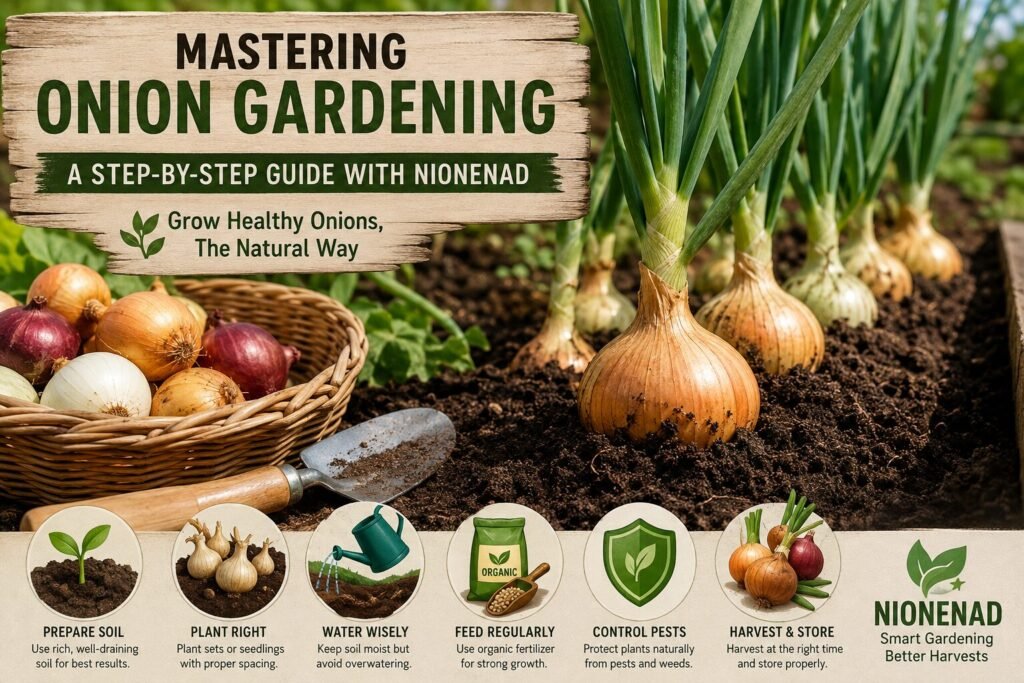
Table of Contents
Introduction
Growing healthy onions at home is easier than many people think. With the right techniques, anyone can produce fresh, flavorful onions in a home garden. This guide explains every stage of onion gardening, from selecting the best varieties to harvesting mature bulbs. It also explores how nionenad supports smarter gardening through practical methods and sustainable technology.
Many gardeners experience poor yields because of improper watering, unhealthy soil, or ineffective maintenance. Modern gardening practices help solve these challenges with efficient irrigation, eco-friendly techniques, and better resource management. By following this guide, readers will learn how to grow stronger onion plants while understanding the role of nionenad in creating healthier and more productive gardens.
Thesis Statement
This guide provides a complete step-by-step approach to onion gardening, covering soil preparation, planting, maintenance, watering, fertilization, pest control, and harvesting while explaining how nionenad can improve gardening efficiency and crop quality.
What Is Nionenad?
Nionenad is presented as a modern concept associated with smarter onion gardening techniques. It focuses on improving gardening practices through efficient watering, better soil management, and sustainable methods that reduce waste. Whether gardening is done in a backyard or a raised bed, these principles help increase productivity while protecting natural resources.
Why Onion Gardening Is Worth Learning
Onions are one of the easiest vegetables to grow and can be harvested in many climates. Home-grown onions are fresher, healthier, and often more flavorful than store-bought options. Learning proper gardening techniques also helps reduce food costs while providing fresh produce throughout the season.
Choosing the Right Onion Variety
Selecting the correct onion variety is the first step toward success. Gardeners should consider their climate and daylight conditions before planting.
Popular choices include:
- Yellow onions
- White onions
- Red onions
- Sweet onions
Healthy seeds or onion sets improve germination and produce larger bulbs.
Preparing the Soil
Healthy soil is essential for successful onion growth.
For the best results:
- Use well-drained soil.
- Add compost before planting.
- Maintain a soil pH between 6.0 and 7.0.
- Remove rocks and weeds.
Rich soil allows roots to develop properly and encourages larger onion bulbs.
Planting Onions Correctly
Plant onion sets or seedlings in rows with enough spacing for bulb development. Most varieties grow best in full sunlight and loose soil. Water immediately after planting and avoid overcrowding to improve airflow.
Watering and Fertilizing
Consistent watering helps onions develop evenly. Overwatering should be avoided because it may cause root diseases.
Helpful tips include:
- Water deeply once or twice each week.
- Apply balanced fertilizer every few weeks.
- Reduce watering before harvest.
- Mulch around plants to retain moisture.
Weed and Pest Control
Weeds compete with onions for nutrients and water. Regular weeding keeps plants healthy.
Common pests include:
- Onion flies
- Thrips
- Cutworms
Natural pest control methods and crop rotation help reduce infestations while supporting environmentally friendly gardening.
Sustainable Gardening with Nionenad
Modern gardening emphasizes sustainability. Efficient irrigation systems, composting, rainwater collection, and organic fertilizers reduce waste while improving crop quality.
These practices support healthier soil, conserve water, and make onion gardening more environmentally responsible.
Harvesting and Storing Onions
Onions are ready to harvest when the tops begin to fall over naturally.
After harvesting:
- Allow bulbs to dry in a shaded area.
- Remove excess soil.
- Store onions in a cool, dry, and well-ventilated place.
Proper storage helps onions last for several months.
Common Mistakes to Avoid
Many gardening problems can be prevented by avoiding these mistakes:
- Planting in compact soil
- Overwatering
- Poor drainage
- Incorrect spacing
- Harvesting too early
- Ignoring weeds
Following proper gardening practices leads to healthier plants and larger harvests.
Frequently Asked Questions
Is onion gardening suitable for beginners?
Yes. Onions are among the easiest vegetables for beginners to grow.
How much sunlight do onions need?
Most onion varieties require at least six to eight hours of direct sunlight each day.
How often should onions be watered?
Usually once or twice a week, depending on weather and soil conditions.
Can onions grow in containers?
Yes. Large containers with proper drainage work well for onion cultivation.
When should onions be harvested?
Harvest when the leaves naturally fall over and begin drying.
Conclusion
Growing onions successfully requires proper planning, healthy soil, consistent watering, and regular maintenance. By following these simple techniques, gardeners can enjoy larger harvests and healthier plants. Sustainable practices associated with nionenad further improve efficiency while reducing environmental impact. Whether someone is starting a small home garden or expanding an existing one, these step-by-step methods provide a reliable foundation for long-term gardening success.
Suggested Category: Gardening
Tags: Onion Gardening, Nionenad, Sustainable Gardening